Blog / Service Tips

Where Can I Get a Chevrolet Oil Change in Whitesboro, TX?

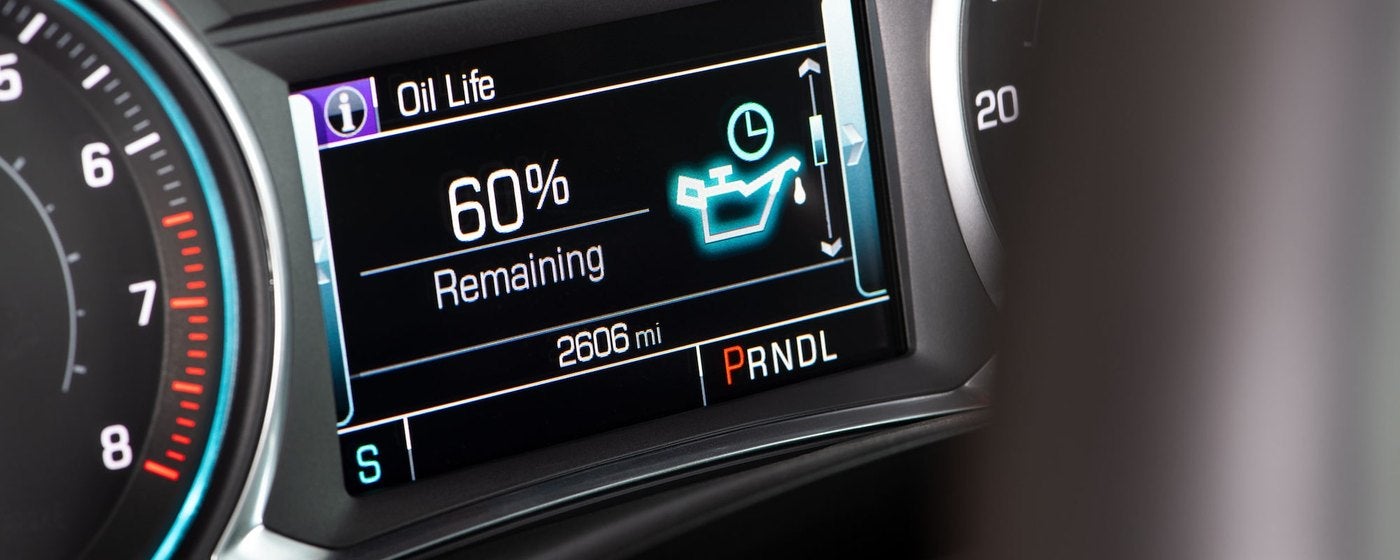
Chevrolet instrument cluster showing oil life at 60 percent remaining, a reminder for an oil change in Whitesboro, TX

Service | Whitesboro, TX

Holiday Chevrolet changes oil on Chevys every day at 1009 US 82 in Whitesboro, and the visit is simpler than most people expect.

If you drive a Chevrolet around Grayson County, you already know how fast the miles stack up. Commutes to Sherman, runs down US 377, trips to Denison for work, and a lot of short stops in between all add wear to your oil.

This guide covers where to get a Chevrolet oil change in Whitesboro, how often to do it, what type of oil your truck or SUV needs, and what happens during the visit. Everything here comes from how the Chevrolet service process works, not guesses.

Quick answer: Holiday Chevrolet, at 1009 US 82 in Whitesboro, TX, performs Chevrolet oil changes using the oil grade your owner's manual calls for. Follow your Oil Life Monitor, and plan on at least one change a year even if the monitor reads high.

Where

Whitesboro, TX
1009 US 82, on the west side of town

When

Per Oil Life Monitor
At least once a year, sooner with heavy towing

How

Online or by phone
Use the schedule service page to pick a day

Where can I get a Chevrolet oil change in Whitesboro?

The service department at Holiday Chevrolet handles oil changes for every current Chevrolet model, from a Trax to a Silverado 2500HD. It sits at 1009 US 82 in Whitesboro, which makes it an easy stop for people coming from Sherman, Gainesville, or Denison.

Because the shop works on Chevrolets all day, the technicians see the same engines, filters and drain plugs again and again. That familiarity is a real advantage on an oil change, since the details that matter, like the correct filter and the right fill amount, are already routine.

A short drive matters too. Oil changes tend to get skipped when the shop is across a county line, because nobody wants to burn half a morning on the trip. Keeping the work in Whitesboro means the appointment fits around a normal day, and you can get back to work or home without a long detour.

You can start on the service page to see what the department offers, or go straight to the oil change page for the details on this specific service.
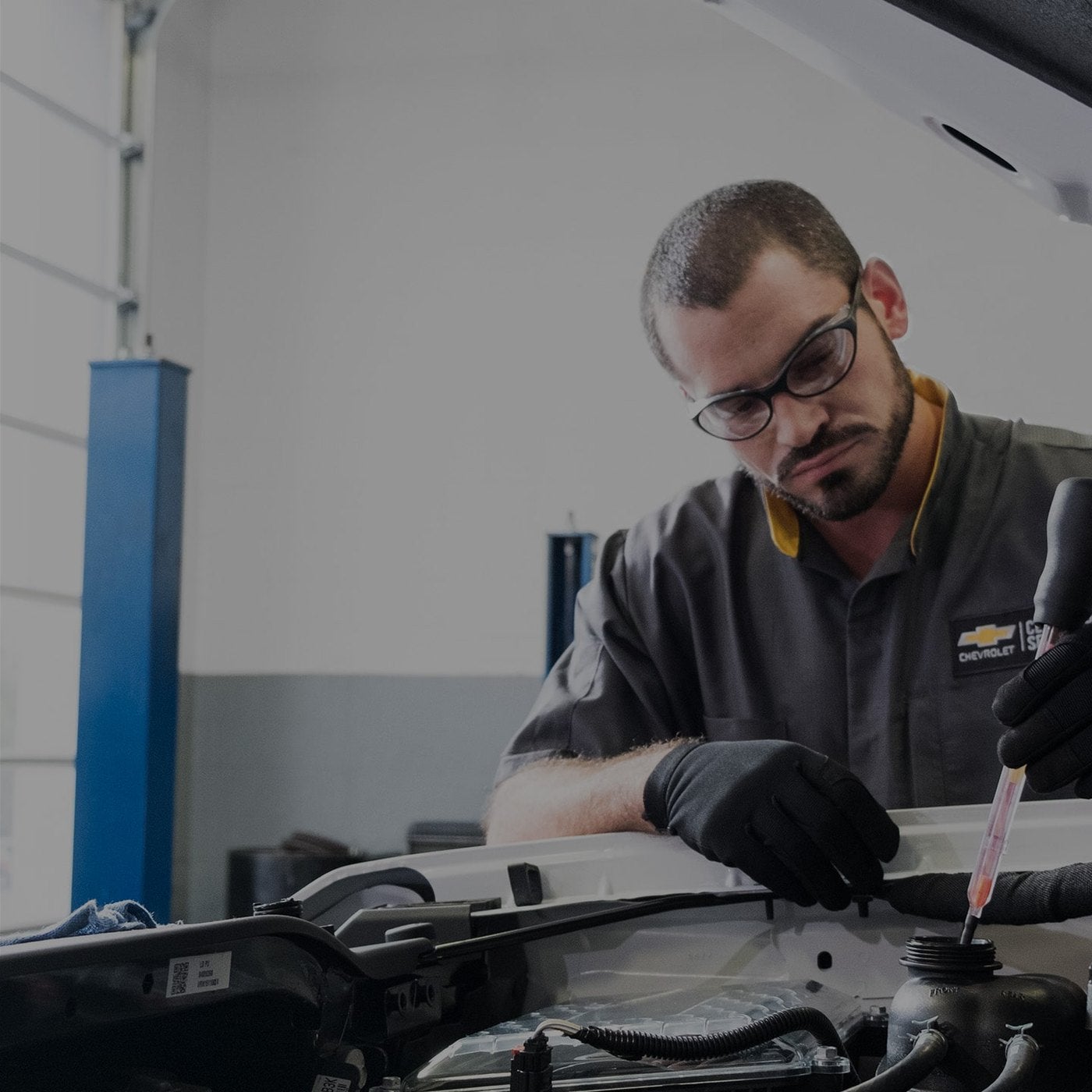
Chevrolet service technician in safety glasses checking fluid under the hood during an oil change

How often should a Chevrolet get an oil change?

Most newer Chevrolets have an Oil Life Monitor in the dash. It tracks engine revolutions, operating temperature and other inputs, then tells you when the oil has reached the end of its useful life. That beats a fixed number on a sticker, because two trucks with the same mileage can have very different driving behind them. The Oil Life Monitor knows your driving better than a sticker on the windshield does.

The Oil Life Monitor knows your driving better than a sticker on the windshield does.

A good rule is to change the oil when the monitor says so, and not to let more than a year pass even if the reading still looks healthy. Oil ages with time as well as miles, and short trips that never fully warm the engine make that worse. Neighbors who run farm trucks or work crews around Whitesboro often see the monitor drop faster than a commuter would, and that is the system doing its job.

Does towing or short trips change the interval?

Yes. Hauling a trailer, idling at job sites, driving on dusty county roads and making lots of short hops all count as harder use. The monitor accounts for much of this on its own, but if you tow often with a Silverado, bring the truck in a little ahead of the reminder rather than a little behind it.

Local driver tip: North Texas summers are hard on oil. If your truck sat in a hot parking lot all day and then ran a long highway stretch home, the oil felt that heat. Treat July and August as heavy use months.

What type of oil does my Chevrolet need?

Chevrolet engines are built around oil that meets a General Motors standard called dexos. Your owner's manual lists the exact viscosity grade for your engine, and the service team matches it to the vehicle in the bay. You do not have to remember a grade number or compare labels at a parts counter.

Most current Chevrolets run a synthetic or synthetic blend oil because modern engines run hotter and tighter than older designs. Using the wrong grade can change how the engine protects itself on a cold start, which is when most wear happens.

If you drive an older Chevrolet, the same logic applies. The manual for that model year names the oil it was designed around, and the shop follows it.

One more point on quality: oil is not the only thing that goes in. The filter, the drain plug seal and the fill amount all matter, and a shop that works on Chevrolets all week has those details written into its routine. Skipping any of them can leave you with a slow leak or a low oil level a few weeks later.

What happens during a Chevrolet oil change visit?
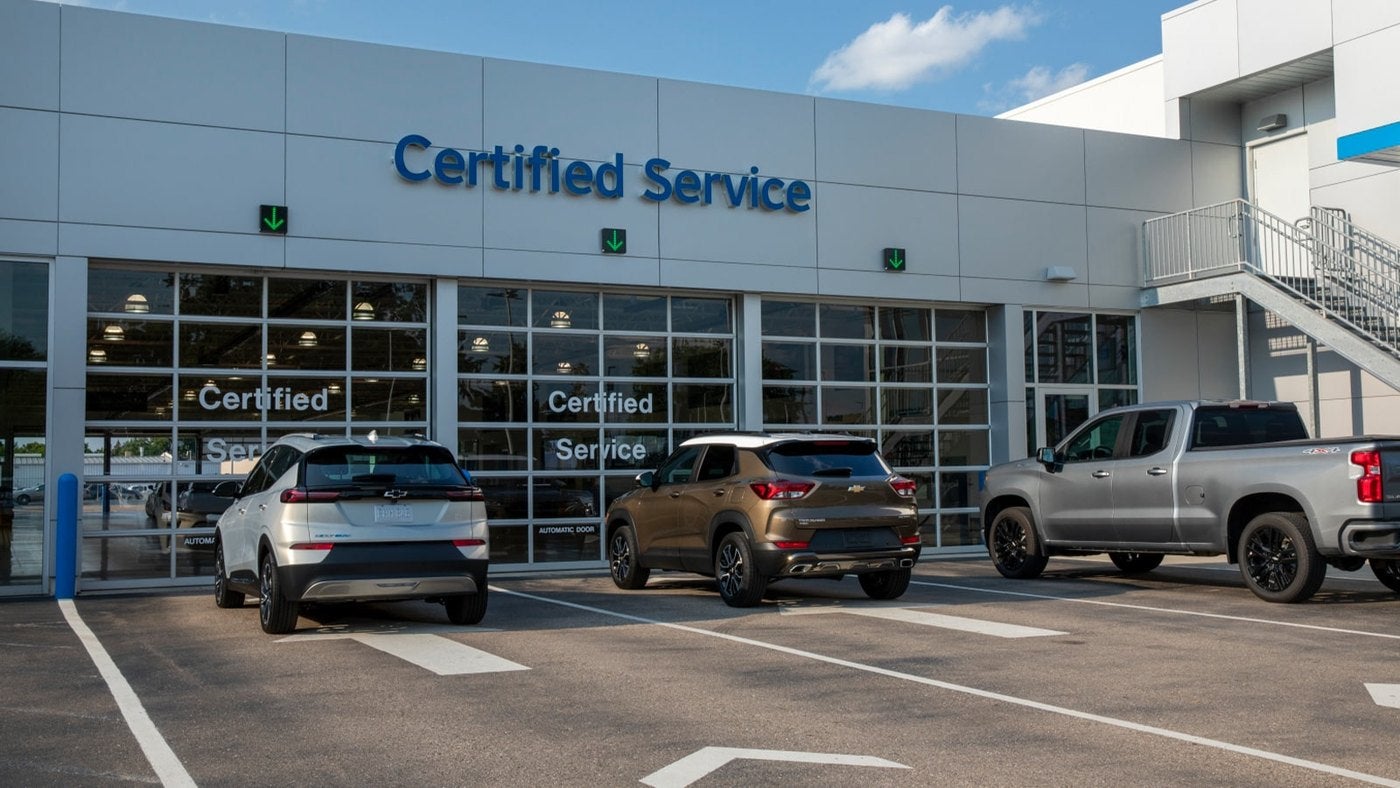
Chevrolet Certified Service building with a Bolt, Trailblazer and Silverado parked out front

The visit follows a clear order, and knowing it helps you ask good questions.

Check in

The advisor confirms your vehicle, mileage and any dash messages, and asks if you have noticed anything unusual.

Drain and replace

The technician drains the old oil, replaces the filter and refills with the correct oil for your engine.

Reset and inspect

The Oil Life Monitor is reset, and the technician looks over fluid levels, tires and belts while the vehicle is up.

Review

The advisor walks you through anything that needs attention, so you can decide what to do and when.

Ask questions at the review step. A good advisor will tell you what is urgent, what can wait a few months, and what is only a note for the future.

Most oil changes do not turn up anything dramatic. That is the point of doing them on time. When the service advisor does find something, such as a worn belt or a tire wearing unevenly, catching it during a routine visit keeps it from becoming a roadside problem later.

What should I bring and watch for before I book?

Bring your key fobs, note your current mileage, and mention any warning lights. If your truck has been burning or leaking oil between changes, say so at check in. That detail changes what the technician looks for.

A flashing oil pressure light means stop driving and shut the engine off. Call for help instead of making it to the shop.

A burning smell after a long drive can mean oil is reaching the exhaust. Have it checked soon.

Oil that looks milky on the dipstick can point to a coolant problem and needs a prompt look.

If none of those apply, you are in routine territory. Pick a day that suits your schedule, drop the vehicle off, and let the shop handle the rest.

If you are also thinking about your next vehicle, the same Whitesboro team can show you what is on the lot. Browse new Chevrolet inventory whenever you like, no appointment needed.

Book it your way

Schedule online from your phone, call the service department, or stop by 1009 US 82 in Whitesboro. Pick whichever fits your day, and the shop will take it from there.

Frequently asked questions

Timing and intervals

How often should I change the oil in my Chevrolet?

Follow the Oil Life Monitor in your dash. Even if it reads high, plan on at least one change a year because oil ages with time as well as miles.

Can I go longer between oil changes if I mostly drive highway miles?

Highway driving is easier on oil than short trips, and the monitor reflects that. Still, do not skip the yearly change.

Do I need an oil change if I rarely drive my truck?

Yes. Oil breaks down over time and picks up moisture, so a truck that sits still needs a change once a year.

Oil type and parts

What oil does a Chevrolet Silverado use?

It depends on the engine and model year. Your owner's manual lists the grade, and the service team uses an oil that meets the General Motors dexos standard.

Is synthetic oil required for a Chevrolet?

Many current Chevrolet engines are designed for synthetic or synthetic blend oil. Check the manual for your exact model year.

Does the shop replace the oil filter every time?

Yes. A fresh filter goes in with every oil change so the new oil is not pushed through a clogged one.

Booking and the visit

How do I schedule a Chevrolet oil change in Whitesboro?

Use the schedule service page on holidaychevy.net, call the service department, or visit the dealership at 1009 US 82.

What should I bring to my oil change appointment?

Bring your keys and note your mileage and any warning lights. If you track maintenance, bring those records too.

Will the shop check anything besides the oil?

The technician looks over fluid levels, tires and belts during the visit and the advisor reviews anything that needs attention.

Vehicles and special cases

Do you change oil on older Chevrolets?

Yes. The shop follows the oil grade listed for your model year in the owner's manual.

Can I get an oil change on an Equinox EV?

The Equinox EV has no engine oil. It has other service needs, so ask the service team what applies to it.

Does towing mean I need oil changes more often?

It can. Towing, idling and dusty roads count as harder use, so come in ahead of the reminder.

After the change

Why is my oil light on after an oil change?

The Oil Life Monitor should be reset at the visit. If a light stays on, call the service department right away.

Is it normal for my engine to sound different after an oil change?

Fresh oil can make an engine run a little quieter. Any new knocking or ticking should be checked.

What happens if I skip an oil change?

Old oil loses its ability to protect the engine, which can lead to sludge, extra wear and costly repairs down the road.
Start with a new truck

See what is on the lot at Holiday Chevrolet in Whitesboro.

Shop new inventory

Questions before you visit

Reach the Whitesboro team and get directions to the dealership.

Contact us
Posted in:

Related Posts

Overhead console in a Chevrolet with OnStar, SOS and passenger airbag status buttons

What Should I Do When My Chevy Check Engine Light Comes On?

Service | Whitesboro, TX A check engine light is a message, not a verdict, and what you do in the first few minutes decides how big the repair gets. It usually shows up at a bad time. You are halfway down US 377 with a trailer behind you, or pulling out of a parking lot in Sherman, and a small amber engine icon lights up the dash. Plenty of people ignore it for weeks, and plenty panic and pull over for no reason. This guide explains what the light means, how to tell a minor warning from a real problem, what you can safely check yourself, and what happens when you bring your Chevrolet to the service department at Holiday Chevrolet in Whitesboro. Quick answer: A steady check engine light means the vehicle stored a fault and should be scanned soon. A flashing light means stop driving and call for help. Holiday Chevrolet at 1009 US 82 in Whitesboro can read the codes and diagnose the cause. Steady light Book a scan soon Safe to drive short distances in most cases Flashing light Pull over Shut the engine off and call for help First check The gas cap A loose cap is a common trigger In this post What does the check engine light mean on a Chevy? Is it safe to keep driving with the light on? What can I check myself before I call? What happens when I bring my Chevy in for a check engine light? Why should I not ignore a steady light? What does the check engine light mean on a Chevy? Your Chevrolet has a computer that watches the engine, the emissions system and the transmission. When a sensor reports a reading outside its normal range, the computer stores a trouble code and turns on the check engine light. The light does not tell you what failed. It tells you something is out of range. The cause can be as small as a loose gas cap or as serious as an engine misfire that damages the catalytic converter. That wide range is why a scan matters more than guessing. The service department can read those stored codes and then test the system to find the real cause. You can see what the shop handles on the service page. Is it safe to keep driving with the light on? It depends on how the light behaves. A steady light usually means the vehicle can be driven carefully while you arrange a scan. A flashing light is different. A flashing check engine light means a severe misfire. Pull over safely, shut the engine off and call for help. A check engine light with a loss of power, rough running or smoke needs a stop right away. A check engine light with a red oil pressure or temperature warning means shut it down immediately. A steady light is a reason to book a visit, and a flashing light is a reason to stop. A steady light is a reason to book a visit, and a flashing light is a reason to stop. If you are not sure which one you have, watch the dash for a minute. Flashing is hard to miss. What if the light comes on while I am towing? Slow down, find a safe place to pull off and let the engine settle. Towing adds load to the engine and transmission, so a fault that feels minor at idle can get worse under strain. If the light is steady and the truck drives normally, drive gently and head to a shop. If anything feels off, stop. Pay attention to how the vehicle behaves, too. A light that comes with a shake at idle, hard shifts, a drop in power or a strange smell tells the technician where to start. A light with no change in how the vehicle drives is often a sensor or emissions issue, which is still worth a scan but rarely an emergency. Local driver tip: Use your phone to snap a photo of the dash when the light appears. If it also shows another message, like reduced power or service transmission, the advisor can use that detail. What can I check myself before I call? A few checks take two minutes and rule out the easy causes. None of them replace a scan, but they might save you a trip. 1 Tighten the gas cap Remove it, put it back and click it until it stops. A loose cap can trigger the light. 2 Look at your recent fill up Bad or contaminated fuel can cause a temporary fault. 3 Note the symptoms Rough idle, hesitation, poor mileage or odd sounds all help the technician. 4 Check the battery Weak batteries can trigger electrical codes. The battery service page explains testing. Do not reach for a code reader at the parts store and start replacing parts based on the first code you see. Codes point toward a system, and swapping parts without testing is a good way to spend money and still have the light on. After tightening the cap, give the vehicle a day or two of normal driving. If the light is going to clear, it often does. If it stays on, book the scan. What happens when I bring my Chevy in for a check engine light? The technician connects a scan tool to the diagnostic port under the dash and reads the stored codes. A code points to a system, not always to a part. A misfire code, for example, could come from a spark plug, a coil or a fuel issue, so the technician follows the code with tests to confirm the real cause. Then the advisor explains what was found and what it will take to fix. Ask them to separate what needs attention now from what can wait. Schedule service See service specials Expect the advisor to ask about recent work on the vehicle, because a recent repair, a fresh tank of fuel or a new battery can all shape what the codes mean. If you have service records, bring them. Your Chevrolet has a history, and the shop can read it faster with your help. Bring your key fobs and a short note about when the light came on and how the vehicle was driving. The more detail you share, the faster the diagnosis goes. Why should I not ignore a steady light? A small fault left alone can grow. A failing sensor can hurt fuel economy. A weak spark plug can wear out an ignition coil, and sustained misfires can harm the catalytic converter, which is an expensive part to replace. Fixing the original issue early usually costs less than fixing the damage it causes later. The practical side matters too. A check engine light can keep a vehicle from passing an emissions inspection in areas that require one, and it can hide a new warning if something else goes wrong. You want that light to mean something when it comes on. Folks around Whitesboro put plenty of miles on their trucks, between work and the drive into Sherman or Denison. If your light just came on, the Chevrolet team on US 82 is a short stop away. Book it your way Schedule online from your phone, call the service department, or stop by 1009 US 82 in Whitesboro. Pick whichever fits your day, and the shop will take it from there. Frequently asked questions The basics + What does the check engine light mean? It means the vehicle computer stored a fault from a sensor or system. A scan shows which one. + Why is my check engine light on after I filled up? A loose gas cap or contaminated fuel can trigger it. Tighten the cap and see if it clears over a few days. + Can the light come on and go off by itself? Yes. Some faults are temporary, but the stored code stays in the computer for the technician to read. Safety and driving + Can I drive with the check engine light on? A steady light usually allows careful driving to a shop. A flashing light means stop and call for help. + What does a flashing check engine light mean? It points to a severe misfire that can damage the exhaust system, so stop driving. + Is it safe to tow with the light on? Avoid towing until a technician scans it, since towing adds strain to the engine and transmission. Causes + What are common causes of a check engine light? Loose gas caps, oxygen sensors, spark plugs, ignition coils and emissions parts are common causes. + Can a weak battery trigger the light? It can, since low voltage can confuse electronic systems. A battery test helps rule it out. + Will bad gas turn on the light? It can cause misfires and a temporary fault. A scan will show the code. The service visit + How does the shop find the cause? The technician reads the stored codes with a scan tool and runs tests to confirm the failing part. + What should I tell the advisor? Share when the light came on, how the vehicle drives and any sounds or smells you noticed. + Can I wait while the shop scans my Chevy? Ask the advisor when you schedule. The wait depends on what the scan finds. Booking and follow up + How do I schedule a check engine light diagnosis in Whitesboro? Use the schedule service page on holidaychevy.net, call the service department, or visit 1009 US 82. + Will clearing the code fix the problem? No. Clearing the code turns the light off, but the fault returns if the cause is still there. + What if the light returns after a repair? Contact the service department with the details so they can look at it again. Check our hours See when the Whitesboro dealership is open. View hours Questions before you visit Reach the Whitesboro team and get directions to the dealership. Contact us

Close view of a deep truck tire tread with wide blocks and grooves

How Do I Get My Chevy Ready for Fall in North Texas?

Service | Whitesboro, TX Fall is the easiest season to get a Chevy ready, because summer heat has already done its worst and winter has not arrived yet. North Texas fall is a short window. The nights cool off, the football crowds hit US 82 and US 377, and then one morning in November frost sits on the windshield. The vehicle that handled July without complaint can start acting up once the temperature swings. This guide walks through what to check on a Chevrolet before fall settles in: tires, brakes, battery, wipers, lights and fluids. It also covers what the service team at Holiday Chevrolet looks at, so you know what to expect when you book a visit in Whitesboro. Quick answer: Before fall in North Texas, have your Chevy's tires, brakes, battery, wipers, lights and fluid levels checked. Holiday Chevrolet at 1009 US 82 in Whitesboro can do the whole list in one visit. Check first Tires and brakes Wear and tread depth matter most when roads get wet Check next Battery and lights Summer heat weakens batteries, and cold exposes it Book Before the first cold snap Appointments fill up once the weather turns In this post What does a Chevy need before fall in North Texas? Why do tires and brakes matter more when the weather changes? How do I check the battery, wipers and lights? What fluids and filters should I look at? How do I book a fall check in Whitesboro? What does a Chevy need before fall in North Texas? Start with the idea that fall is a transition, not a deadline. Summer in Grayson County runs hard on a vehicle. Heat bakes rubber, thins fluids and drains batteries. Fall is when the damage shows up, usually on the first cool morning when a tired battery cannot turn the engine over, or on the first rainy evening when worn wipers smear the windshield. A good fall check is mostly about catching small things while they are still small. A tire with uneven wear, a wiper blade that has split, a brake pad getting thin. None of these feel urgent in September. All of them feel urgent in a November downpour. You can see what the service department offers on the service page before you decide what to schedule. Why do tires and brakes matter more when the weather changes? Wet pavement is the big change. North Texas fall brings long dry spells followed by sudden storms, and the first rain lifts oil and dust off the road surface. That film makes roads slick for a short time, and tires with shallow tread give up grip fast. Good tires and healthy brakes are the cheapest insurance a driver in Texas can carry. Good tires and healthy brakes are the cheapest insurance a driver in Texas can carry. Ask the technician to measure tread depth on every tire, check the sidewalls for cracks, and confirm that the pressures match the sticker on the driver door jamb. How do I know when it is time for new tires? Look at the wear bars molded into the tread. If the bars are level with the rubber, the tire is done. Also watch for a pull to one side, a vibration at highway speed, or bulges on the sidewall. If any of those show up, stop by the new tires page or ask your advisor to look at the tires during the visit. For brakes, the signs are a squeal, a grinding sound, a longer stopping distance, or a soft pedal. A brake inspection looks at pad thickness, rotor condition and fluid level, so you know where you stand. Local driver tip: After a dry stretch, the first storm is the dangerous one. Slow down on that first rainy day, leave extra room, and give your tires a chance to clear the road film. How do I check the battery, wipers and lights? The battery is the quiet failure. A battery that survived the heat may have lost capacity, and cool mornings ask more of it. If your engine cranks slowly, the dash lights dim at startup, or the battery is more than a few years old, get it tested. The battery service page explains what the shop checks. Wiper blades are cheap to replace and annoying to ignore. Run the wipers on a dry windshield and look for streaks, chatter or skipped spots. Texas sun cooks the rubber, so blades that looked fine in spring may be done by October. Walk around the vehicle with the lights on. Headlights, brake lights, turn signals and fog lights all matter when sunset comes earlier. A burned out bulb is easy to fix and a common reason for a traffic stop. 1 Test the battery Ask for a load test instead of a visual check, since a battery can look fine and still fail. 2 Replace worn wipers Choose blades that fit your model, and clean the glass while you are at it. 3 Check every light Have someone stand behind the vehicle while you press the brake. 4 Look at the heater and defroster Run both for a minute to confirm warm air and clear glass. What fluids and filters should I look at? Oil, coolant, brake fluid, washer fluid and the engine air filter are the usual list. Oil follows your Oil Life Monitor, and the oil change page explains how that works. Coolant protects against both heat and freezing, so it matters in a state that sees both. Brake fluid absorbs moisture over time, which is one reason the manual lists a service interval for it. The cabin air filter is easy to forget. If the vents smell musty or airflow feels weak when you turn on the heat, a clogged filter may be the cause. It is a simple swap and helps the heater work the way it should. A coolant level that keeps dropping points to a leak and needs a prompt look. A sweet smell inside the cabin can mean a heater core problem. Brake fluid that looks dark or a pedal that feels soft needs attention before you drive further. If you tow, haul or run a work truck, tell the advisor. Heavy use shortens the life of fluids and brakes, and the technician can adjust what to inspect. How do I book a fall check in Whitesboro? Pick a day before the weather turns, then describe anything you have noticed lately. Strange noises, slow starts, warning lights and odd smells all help the technician focus. Bring your keys and your mileage, and plan on a visit that covers the whole checklist at once. Schedule service See service specials If the review turns up something bigger than expected, ask the advisor to rank the work by urgency. What needs doing this week, what can wait a month, and what is only worth watching. That keeps the plan clear and your budget in your hands. Fall in North Texas rewards the people who check early. Book the visit, tell the team what you have noticed, and you will be ready before the first cold snap. Book it your way Schedule online from your phone, call the service department, or stop by 1009 US 82 in Whitesboro. Pick whichever fits your week, and the shop will take it from there. Frequently asked questions Timing and planning + When should I get my Chevy ready for fall? Late summer through early October is a good window in North Texas. It gives you time to fix issues before the first cold morning. + How long does a fall inspection take? It depends on what the technician finds, so ask the advisor for an estimate when you check in. + Do I need a fall check if my Chevy is new? A newer vehicle still benefits from a look at tires, wipers and fluids, especially after a hot summer. Tires and brakes + How can I check my tire tread at home? Look for the wear bars in the tread grooves. If they sit level with the rubber, the tire needs replacing. + What tire pressure should my Chevy have? The correct pressure is printed on the sticker in the driver door jamb, not on the tire sidewall. + What are signs my brakes need service? Squealing, grinding, a soft pedal or longer stopping distances all deserve a prompt inspection. Battery and electrical + How long does a car battery last in Texas? Heat shortens battery life, so a battery that is several years old is worth testing before fall. + Can a battery test happen during an oil change visit? Ask your advisor at check in. A test can usually be added to a routine visit. + Why do my lights dim when I start the engine? It can point to a weak battery or a charging issue, and a test will tell you which. Fluids and wipers + How often should wiper blades be replaced? Once a year is a common habit in Texas, because sun and heat wear out the rubber quickly. + Does coolant matter in a warm climate? Yes. Coolant guards against overheating and against freezing on the occasional cold night. + Should I replace the cabin air filter before winter? If airflow is weak or vents smell musty, it is a good time to check it. Booking and costs + How do I schedule service at Holiday Chevrolet? Use the schedule service page at holidaychevy.net, call the service department, or visit 1009 US 82 in Whitesboro. + Can the shop work on trucks and SUVs? Yes. The service department works on current Chevrolet cars, trucks and SUVs. + Where can I see current service offers? The service specials page on holidaychevy.net lists what the dealership has available right now. Thinking about your next vehicle Look through used Chevrolet inventory at the Whitesboro dealership. Browse used inventory Questions before you visit Reach the Whitesboro team and get directions to the dealership. Contact us

Flatbed tow truck on a desert highway with a Chevrolet Equinox and two people beside it

What Should Be Checked on My Chevy Before a Summer Road Trip?

Service | Whitesboro, TX A road trip can start with a good playlist and a cooler, but it goes better when the vehicle has been looked over first. August is prime time for long drives out of North Texas. Families head for the coast, the mountains or a relative's place a few states away, and the Chevy that handles the grocery run all year is suddenly asked to run for hours in triple digit heat with a full load. This post lists what to check on a Chevrolet before you leave, what you can do yourself in the driveway, and what is better handled by a technician. Plan a week ahead if you can, since that leaves room to fix anything you find. Quick answer: Before a summer road trip, check your Chevy's tires, oil, coolant, battery, brakes, lights and wipers. Add a look at belts, hoses and the air conditioning. Holiday Chevrolet in Whitesboro, TX can inspect all of it so you leave with fewer surprises. Check first Tires Pressure, tread and the spare Then Fluids and battery Oil, coolant, brake fluid, and a battery test Book A week ahead Leaves time for any repair you need In this post What should be checked on my Chevy before a summer road trip? Why do tires matter most on a long drive? Which fluids, battery and belts need a look? What can the shop inspect that I can't? What should I do the day before I leave? What should be checked on my Chevy before a summer road trip? The short list covers the parts that most often cause trouble on the road: tires, oil and other fluids, the battery, the brakes, the cooling system, the lights and the wipers. Belts and hoses belong on the list too, since heat is hard on rubber. A trip puts a vehicle under a type of stress that daily driving doesn't. It runs for hours without a break, carries more weight than usual, and often tows or hauls luggage on the roof. A small problem that goes unnoticed around town can become a large one at highway speed. You don't need to be a mechanic to do part of this yourself. The owner's manual shows where the fluid caps and the dipstick sit, and a tire gauge costs very little. The rest, such as brake wear, belt condition and battery health, is quicker and safer with the right equipment, which is what a service department has. Why do tires matter most on a long drive? Tires are the only part of the vehicle that touches the road, and heat makes everything about them harder. Hot pavement raises tire pressure, underinflated tires flex more and overheat, and a worn tire can fail at highway speed. How do I check tire pressure and tread? Check the pressure when the tires are cold, before you drive. The correct number is on the sticker inside the driver door jamb, not on the tire sidewall. Look at the tread across the whole width of each tire, because uneven wear can show up on the inside edge where you can't see it easily. Check for cracks, bulges and nails, and don't forget the spare. If the tread is thin or the sidewalls are cracked, shop for new ones before the trip. The new tires page and the tire finder help you see what fits your Chevrolet. Local driver tip: Pressure drops about a pound for every ten degrees the temperature falls overnight, so a cold morning start after a hot day can leave you a little low. Add air before you leave in the morning, not the afternoon before. Which fluids, battery and belts need a look? Start with the oil. If you are close to your next change or past it, do it before you go. The oil change page explains what to expect. Then check coolant, brake fluid, power steering fluid if your vehicle has it, and washer fluid. A road trip problem is cheapest to fix in your own driveway, not on a shoulder in the middle of nowhere. A road trip problem is cheapest to fix in your own driveway, not on a shoulder in the middle of nowhere. That is the reason to look at the battery now. Heat shortens battery life, and a battery that starts the truck fine at home can fail after a night at a hotel. A quick battery test gives you a clear answer. Belts and hoses should look firm and smooth. Cracks, shiny glazing or a spongy feel mean it is time to replace them. A failed belt can take out power steering, charging and cooling in one go. Last, the air conditioning. If it has been blowing weak, a long trip will make you notice. Have it checked before you commit to hours of sun in the cab. What can the shop inspect that I can't? 1 Brakes Pad thickness, rotor condition and fluid are measured, not guessed. 2 Suspension and steering Worn bushings, shocks and joints affect how a loaded vehicle handles. 3 Battery and charging A load test shows how much life the battery has left, and the charging system is checked. 4 Cooling and belts Hoses, belts and coolant level are inspected for wear and leaks. 5 Lights and wipers Every bulb is checked, and worn wiper blades are flagged before the first storm. Schedule service Explore the service department Allow a little time for the inspection itself. Ask the advisor how long the inspection will take, since timing depends on the day and the work involved. Drop it off early in the week and you will have room to approve any repairs and pick it up without scrambling the night before you leave. Ask the advisor to tell you which items are urgent for the trip and which can wait until you get home. A good inspection comes with a clear list, not a sales pitch. What should I do the day before I leave? Pack the heavy items low and toward the center of the vehicle, and check the weight limit in your owner's manual. Carry water, a phone charger, a flashlight and a basic first aid kit. Keep the spare and jack accessible and know how to use them. Don't ignore a warning light before a trip. A check engine light or a brake light needs attention first. Don't overload the roof. It raises the center of gravity and hurts stability. Don't skip the spare. A flat with no way to change it ends the trip. Know your route too. A rough plan for fuel, food and a place to stay keeps you from driving tired. Download maps ahead of time, since cell coverage can drop out in rural stretches, and share your route with someone at home. Plan stops every couple of hours, drink water and watch the temperature gauge in traffic. Fill up before the long empty stretches. If you're leaving from Whitesboro, fuel up in town and give yourself time to ease onto US 82 or US 377 before the day's traffic builds. Starting calm usually makes the whole drive better. Book it your way Schedule online from your phone, call the service department, or stop by 1009 US 82 in Whitesboro. Pick whichever fits your day, and the shop will take it from there. Frequently asked questions Before you go + How far ahead should I schedule a pre trip inspection? About a week ahead is a good plan. That leaves time for parts or repairs if something turns up. + What is the most important thing to check before a road trip? Tires are the first priority, since they carry the load and handle the heat. Brakes and the battery follow closely. + Do I need an oil change before a long trip? If you are near your due mileage or have passed it, yes. Check your Oil Life Monitor and the owner's manual. Tires and brakes + How do I know the right tire pressure for my Chevy? The sticker inside the driver door jamb lists the recommended pressure. Check it when the tires are cold. + Should I check my spare tire? Yes. Check its pressure and make sure the jack and tools are in the vehicle. + How can I tell if my brakes need work? Squealing, grinding, a soft pedal or a pull to one side are signs. A technician can measure pad thickness for a clear answer. Fluids and battery + Which fluids should I check before a trip? Oil, coolant, brake fluid, washer fluid and power steering fluid on vehicles that have it. + Can a summer trip hurt my battery? Heat shortens battery life, so a weak battery can fail on the road. A quick test tells you where it stands. + Is it safe to open the coolant cap when the engine is hot? No. Wait for the engine to cool completely, since hot coolant is under pressure and can burn you. Loading and towing + How much weight can my Chevy carry on a trip? The owner's manual and the door jamb sticker list the limits. Stay within them. + Should I do anything special if I'm towing? Check the trailer lights, tire pressure on the trailer and the hitch. Ask the service team about the vehicle's towing setup. + Is a roof carrier a good idea? It can help with space, but keep the load light and secure. A heavy roof load hurts stability. Booking and timing + How do I schedule a pre trip inspection in Whitesboro? Use the schedule service page on holidaychevy.net, call the service department, or visit the dealership at 1009 US 82. + What should I tell the advisor? Share how far you're going, what you're carrying and any noises or lights you have noticed. + What if something breaks on the road? Pull over safely, turn on your hazards and call for roadside help. Keep your insurance and roadside numbers handy. Questions before you book Reach the Whitesboro team with anything you want checked. Contact us Need a different ride for the trip Browse new Chevrolet inventory in Whitesboro. Shop new inventory