Service | Whitesboro, TX
Tires wear fast on Texas pavement, and a rotation and alignment at Holiday Chevrolet in Whitesboro is how you get the most out of a set.
Tires are the only part of your Chevy that touches the road, and they take a beating around here. Hot asphalt, gravel shoulders, farm roads and long highway runs all wear them down in different ways.
This post explains when to rotate and align the tires on your Chevrolet, how to spot trouble early, what the service involves and how to book it in Whitesboro. It sticks to practical guidance you can check against your owner's manual.
Quick answer: Rotate your Chevy's tires on the schedule in your owner's manual, often at every oil change visit, and get an alignment when the vehicle pulls to one side, the steering wheel sits crooked or the tread wears unevenly. Holiday Chevrolet in Whitesboro can do both.
Rotation
Per manual
Often paired with an oil change visit
Alignment
When it pulls
Or when tread wears unevenly
Where
Whitesboro, TX
1009 US 82, Holiday Chevrolet
In this post
When should I rotate the tires on my Chevy?
Your owner's manual lists a rotation interval for your model, and it is the right place to start. Many owners find it easiest to rotate tires every time they change the oil, because the two visits line up and the vehicle is already on the lift.
Rotation matters because front and rear tires wear differently. The front tires on most vehicles handle steering and most of the braking, so they wear faster. On a four wheel drive truck, the wear pattern shifts again. Moving the tires around evens things out so you can replace a set at the same time.
If you tow, haul heavy loads or drive a lot on gravel, rotate a little ahead of the schedule. Those jobs scrub tread faster than a quiet commute does.
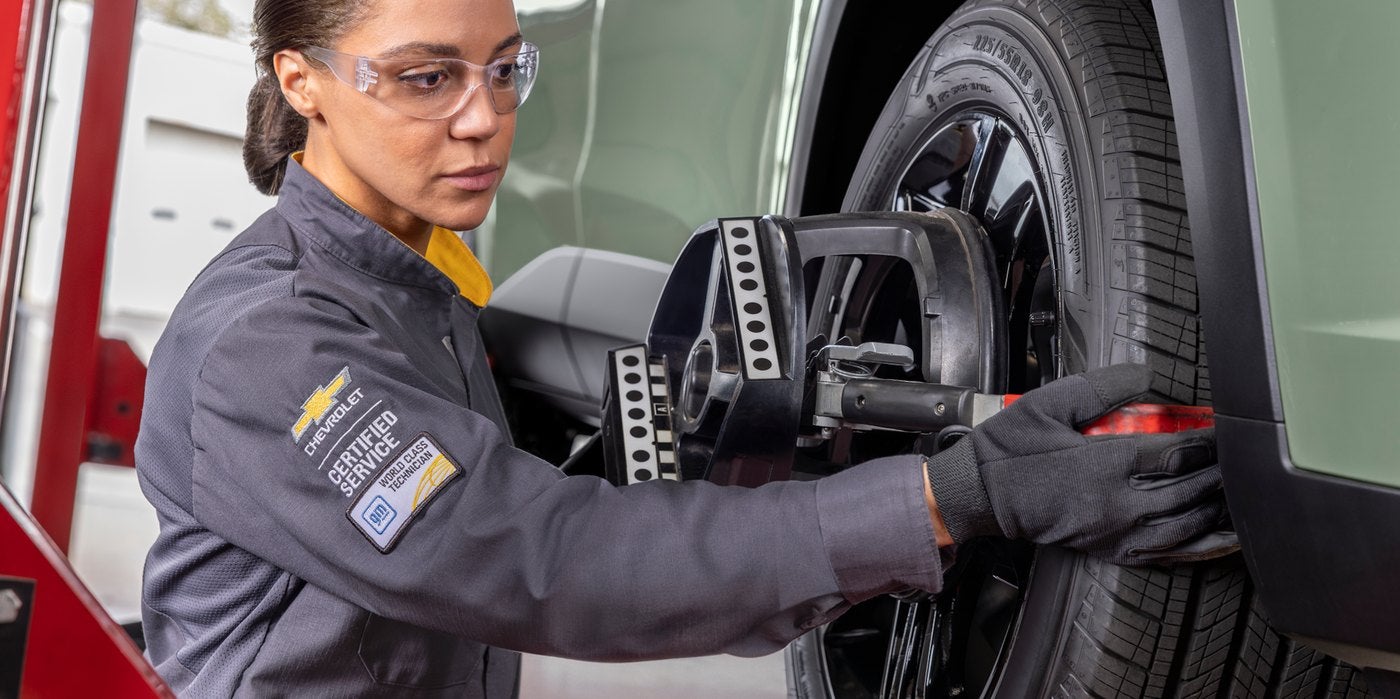
Ask the service advisor to check your tire pressure at the same visit. Pressure changes with Texas heat, and a tire running low wears at the edges faster than one that is properly filled.
What are the signs that my Chevy needs an alignment?
An alignment sets the angles of your wheels so they point where the vehicle is headed. Potholes, curbs, loaded trailers and normal suspension wear can nudge those angles off. You will usually feel or see it before a shop tells you.
The vehicle pulls to one side when you let go of the wheel on a flat road.
The steering wheel sits crooked while the truck drives straight.
The inside or outside edge of a tire is worn down faster than the middle.
The tires squeal or feel noisy in turns for no clear reason.
Not every wobble means alignment. Vibration at highway speed is often a balance issue, and a shaking steering wheel under braking can be a brake problem. A technician can sort it out quickly.
Do I need an alignment after I buy new tires?
Many shops recommend it. A new set of tires is a good moment to check alignment, because correcting it early protects the tread you just bought. It costs little in time and can add months of life to the set.
What does a tire rotation and alignment visit include?
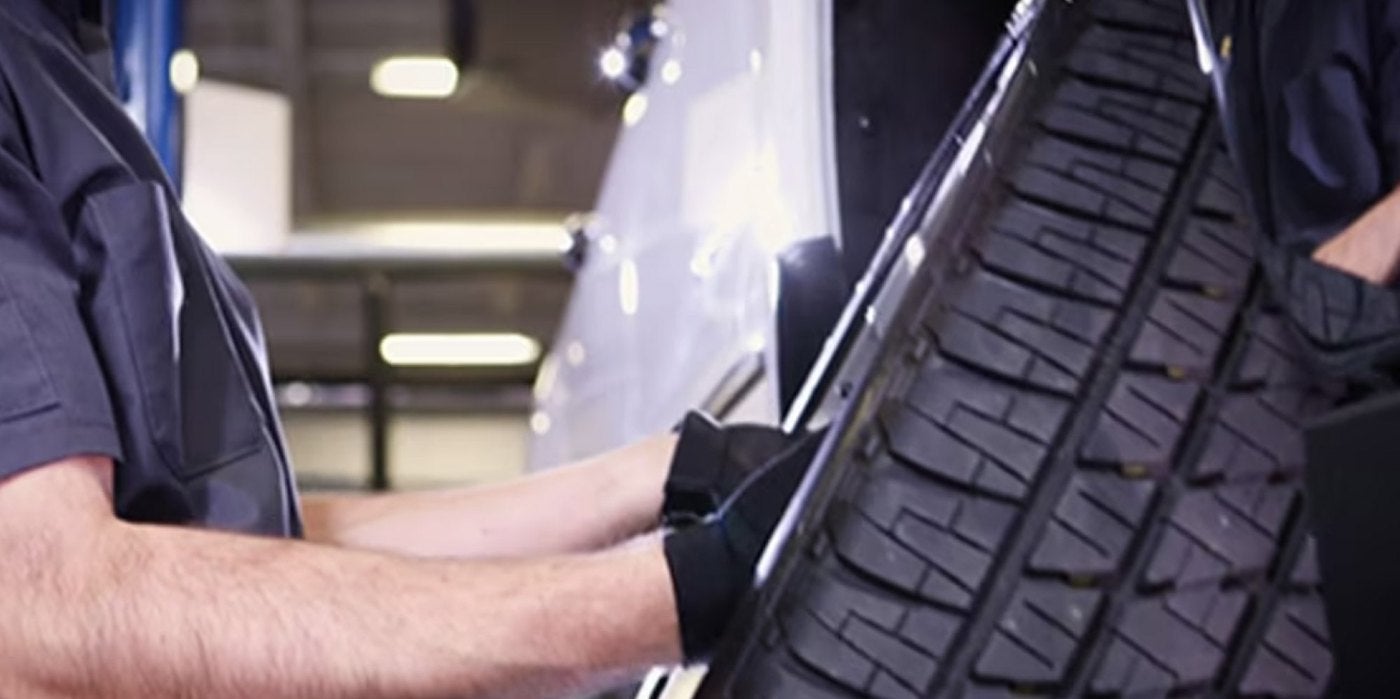
A rotation is straightforward. The technician removes the wheels, moves them to their new positions, checks the lug nuts to the right torque and verifies tire pressure. An alignment takes more equipment and measures each wheel against specification, then adjusts what can be adjusted.
Inspect
The technician looks at tread depth, sidewalls and wear patterns on all four tires.
Rotate
The wheels are moved to new positions following the pattern for your vehicle.
Align if needed
The alignment rack measures wheel angles and the technician adjusts them to spec.
Review
The advisor explains what was found, including tires that are close to the end of their life.
Some drivers wonder if a rotation is worth the stop when the tires look fine. It is. Wear you cannot see yet is already happening, and moving the tires early spreads it out before one pair gets ahead of the other. A set that wears evenly lasts longer and rides quieter, and it saves you from replacing two tires when the other two still have life left.
If a tire is worn out or damaged, the advisor will tell you. You can look over options on the new tires page and use the tire finder to find sizes that fit your Chevrolet.
How do Texas roads and heat change tire wear?
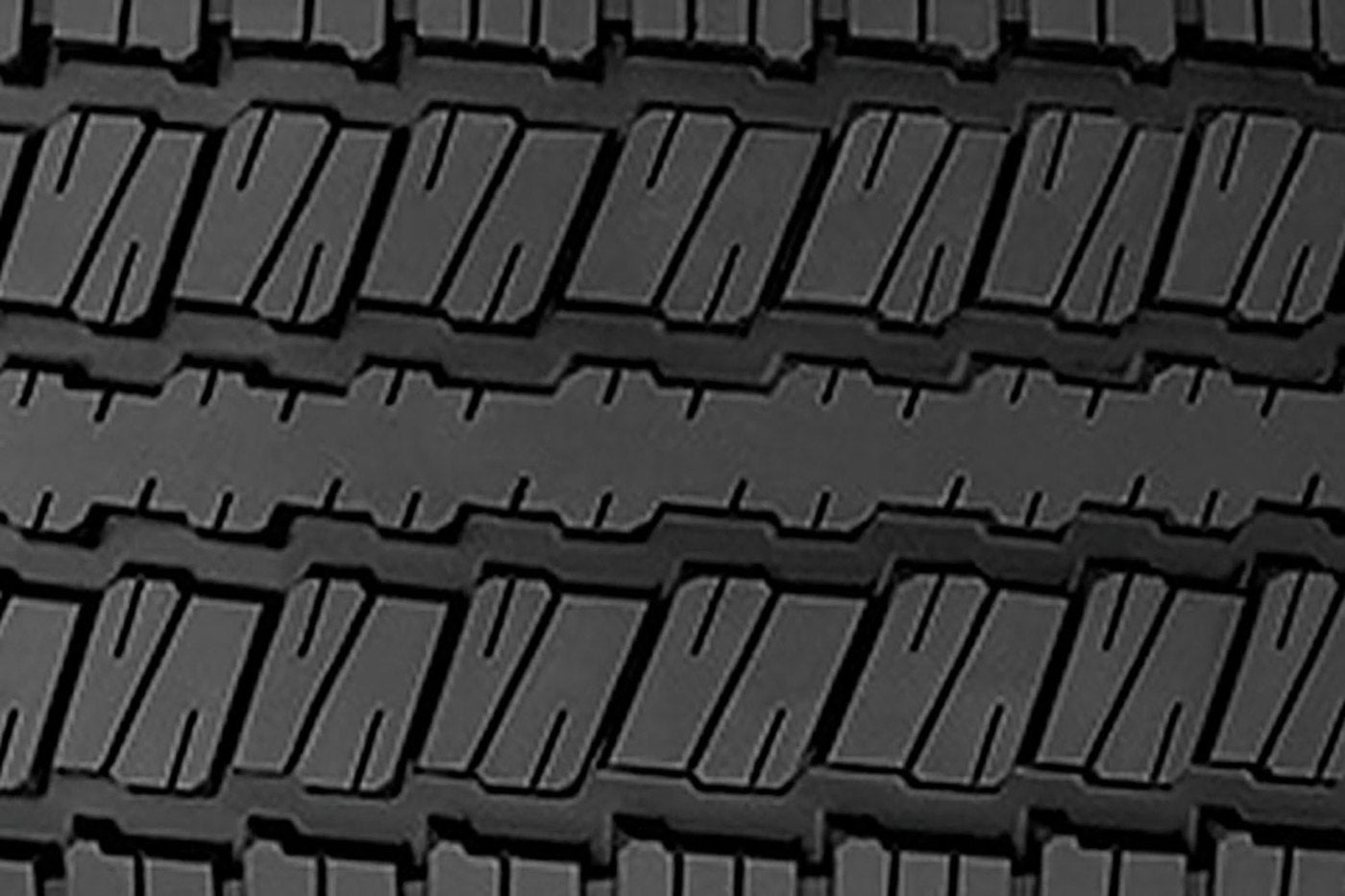
Heat is hard on rubber. Hot pavement raises tire temperature, which speeds up wear and raises air pressure. A tire that was filled in the cool of the morning can be several pounds higher by mid afternoon, so check pressure when the tires are cold.
Seasons matter as well. Spring storms leave debris on the roads, summer heat bakes the tread, and fall brings wet leaves and cooler mornings that change pressure again. A monthly habit keeps up with all of it without much effort.
County roads add their own punishment. Gravel chips the tread, potholes shake alignment out of spec and sharp edges at driveway aprons scuff sidewalls. A truck that spends its week between Whitesboro and a job site picks up more of this than a car that stays on the highway.
A quick look at your tires each month saves a lot of trouble later.
A quick look at your tires each month saves a lot of trouble later. Check the tread, look for nails or bulges and use a gauge for pressure. The sticker inside the driver door jamb lists the pressure for your vehicle, not the number printed on the tire sidewall.
Local driver tip: Walk around your truck once a week before the first trip. Spotting a low tire in the driveway beats finding it on US 82.
How do I book tire service at Holiday Chevrolet in Whitesboro?
Use the schedule service page on holidaychevy.net, call the service department, or stop by 1009 US 82. Tell the team what you notice, whether it is a pull, a vibration or uneven wear, so the technician knows where to start.
Bring any tire warranty paperwork you have. Some tires carry mileage or road hazard coverage, and having the records on hand keeps things moving. If you recently bought tires elsewhere, mention that too.
The dealership also has a hours page so you can plan around the dealership schedule. Most people find that a short call clears up what to expect and how long the visit will take.
Bring the truck in whenever the signs show up, and the team will take a look. Your tires will thank you, and so will your fuel stops.
Book it your way
Schedule online from your phone, call the service department, or stop by 1009 US 82 in Whitesboro. Pick the option that fits your day, and the team will handle the rest.
Frequently asked questions
Rotation basics
How often should I rotate the tires on my Chevy?
Follow your owner's manual. Many owners rotate at each oil change visit because the schedules line up.
Why do tires need to be rotated?
Front and rear tires wear at different rates. Rotating them helps tread wear evenly and lets you replace a set together.
Do four wheel drive trucks need rotations?
Yes. Four wheel drive vehicles often wear tires evenly in different ways, and rotation keeps the set matched.
Alignment basics
What is a wheel alignment?
It is an adjustment of wheel angles so the tires point straight and wear evenly.
How do I know if my truck needs an alignment?
Pulling to one side, a crooked steering wheel and uneven tire wear are the usual signs.
Can potholes knock my alignment out?
Yes. A hard hit from a pothole or curb can change wheel angles.
Tire care
What should my tire pressure be?
Use the pressure on the sticker inside the driver door jamb, not the maximum printed on the tire.
Does heat change tire pressure?
Yes. Hot weather raises pressure, so check it when the tires are cold.
How can I check tread depth at home?
Look at the wear bars in the grooves or use a tread gauge. If the tread is low, have a technician look.
Service visit
Does Holiday Chevrolet rotate and align Chevy tires?
Yes. The service department performs both services on Chevrolet vehicles.
How do I book a rotation or alignment?
Use the schedule service page, call the service department or visit the dealership.
Can I buy tires at the dealership?
Holiday Chevrolet has a new tires page and tire finder on its site. Ask the service team about options for your vehicle.
After the visit
Why does my steering wheel still shake after rotation?
A shake can point to a balance issue or worn parts. Let the service team know so they can check.
Do I need an alignment after new tires?
Many shops recommend checking it, because correct alignment protects new tread.
How often should I check my tires myself?
Check pressure and look them over about once a month, and before long trips.